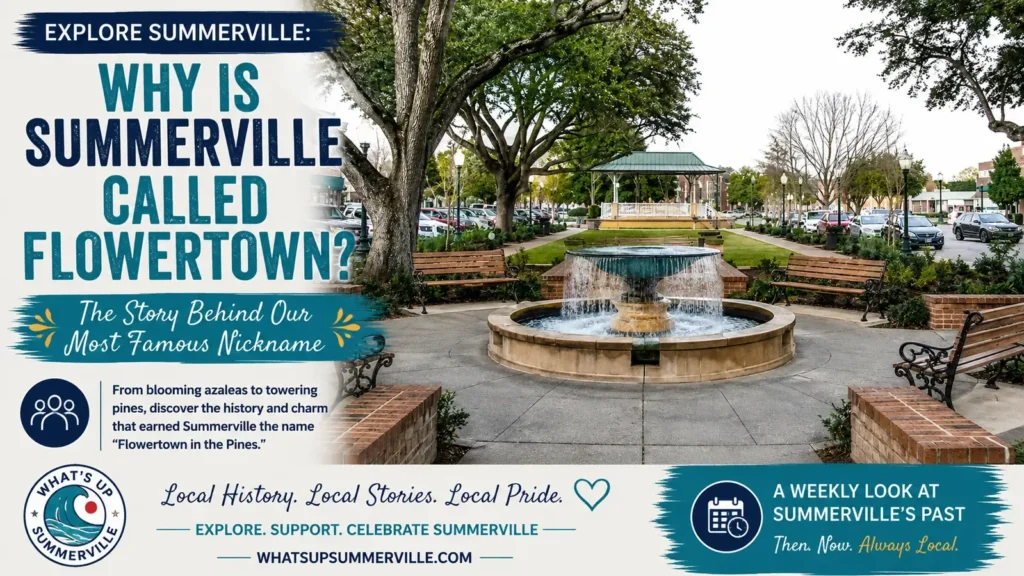
If you’ve lived in Summerville for any amount of time, you’ve probably heard it called “Flowertown in the Pines.”
It’s on the town’s welcome signs, it’s featured on event banners, it’s part of dozens of local business names, and, of course, it’s the namesake of the world-famous Flowertown Festival. But have you ever paused to wonder where the nickname actually came from? Why is this specific corner of the Lowcountry so intertwined with floral beauty?
The answer isn’t just about a few pretty gardens. It’s a story of healing pines, ambitious gardeners, community pride, and a flower that transformed a small Southern town into a destination known across the region. The story of “Flowertown” goes back more than a century and is deeply connected to Summerville’s natural beauty, its unique history as a “health retreat” community, and a single flower that transformed the town into a destination known across the South.
A Town Built Around Fresh Air and Pine Trees
Long before Summerville became one of South Carolina’s fastest-growing communities, it was known as a place people came to escape. To understand why we are “Flowertown,” we first have to understand why we are “in the Pines.”
In the late 1800s, wealthy Charleston residents began traveling inland during the warmer months. They weren’t just looking for a vacation; they were seeking relief from the coastal heat and seasonal illnesses like malaria and yellow fever that plagued the humid coastline. Summerville, with its higher elevation and towering pine forests, was the perfect sanctuary.
The town was originally known as “Pineland Village.”
The scent of pine resin was believed to have medicinal qualities, particularly for respiratory issues. In fact, in 1899, the International Congress of Physicians in Paris named Summerville one of the two best places in the world for the treatment and recovery of lung and throat disorders (the other was in the French Riviera!). For a small South Carolina town, it was an extraordinary distinction and helped cement Summerville’s reputation as a place of healing and recovery.
The pine forests became so vital to the town’s identity and its “health retreat” status that Summerville passed some of the earliest tree-protection laws in the United States. It was, and still is, illegal to cut down certain pine trees without permission. These majestic trees formed the backdrop of the town’s identity, leading to the second half of our famous nickname: “in the Pines.”
The Flower That Changed Everything
While the pines provided the “health,” another natural attraction soon provided the “beauty.”
Azaleas aren’t native to South Carolina. Originally from Asia, they found a perfect home in Summerville’s acidic, sandy soil. By the early 1900s, local homeowners began planting them in abundance. They weren’t just in small flower beds; they were planted along entire streets, around churches, beside grand historic homes, and throughout the town’s public spaces.
The transformation was spectacular. Every spring, the entire town would burst into shades of pink, white, red, and purple. The sight was so breathtaking that word began to spread. People didn’t just come for the “healing air” anymore; they came for the visual spectacle.
One of the most influential figures in this movement was George Segelken. In the 1930s, he donated and planted massive banks of azaleas in what would eventually become the crown jewel of our town’s park system.
The Birth of Azalea Park
As azaleas became part of the town’s identity, community leaders began looking for ways to preserve and showcase that beauty for future generations.
The land that is now Azalea Park was acquired by the Civic League (the predecessor to today’s garden clubs). They envisioned a public space that showcased the town’s botanical heritage. Thanks to their efforts and the incredible climate, the park became a living museum of Southern flora. Today, walking through Azalea Park is one of the most popular things to do in Summerville SC, especially during the spring bloom.
As the town’s reputation for these incredible displays grew, “Pineland Village” faded away, and a new identity took root: Flowertown.

The Birth of the Flowertown Festival
By the early 1970s, the “Flowertown” nickname was firmly established, but community leaders wanted a way to officially celebrate the annual blooms and bring the community together.
In 1972, the very first Flowertown Festival was launched. It was a humble beginning compared to the massive event we see today, but the goal was clear: showcase local gardens, celebrate the spring season, and provide a fun, family-friendly event for residents.
The festival was organized by the Summerville Family YMCA, and to this day, it remains their signature fundraising event. Over the decades, it has grown from a local garden show into one of the largest arts and crafts festivals in the Southeast.
Every year, during the first weekend of April, hundreds of thousands of visitors descend upon Summerville. They come for the 200+ world-class artisans, the delicious food (hello, funnel cakes!), and the live music. But most of all, they come to see the azaleas in Azalea Park. It is the highlight of the Summerville SC events calendar and a major driver for our local economy.
More Than Just Azaleas
While the azaleas are the ‘star’ of the show, the Flowertown nickname represents something much deeper about our community.
- Beautiful Public Spaces — From the manicured paths of Azalea Park to the community hub of Hutchinson Square.
- A Connection to Nature — Protecting our legendary pines even as the town continues to grow.
- Historic Preservation — Many of the most stunning displays surround homes that have stood for more than a century.
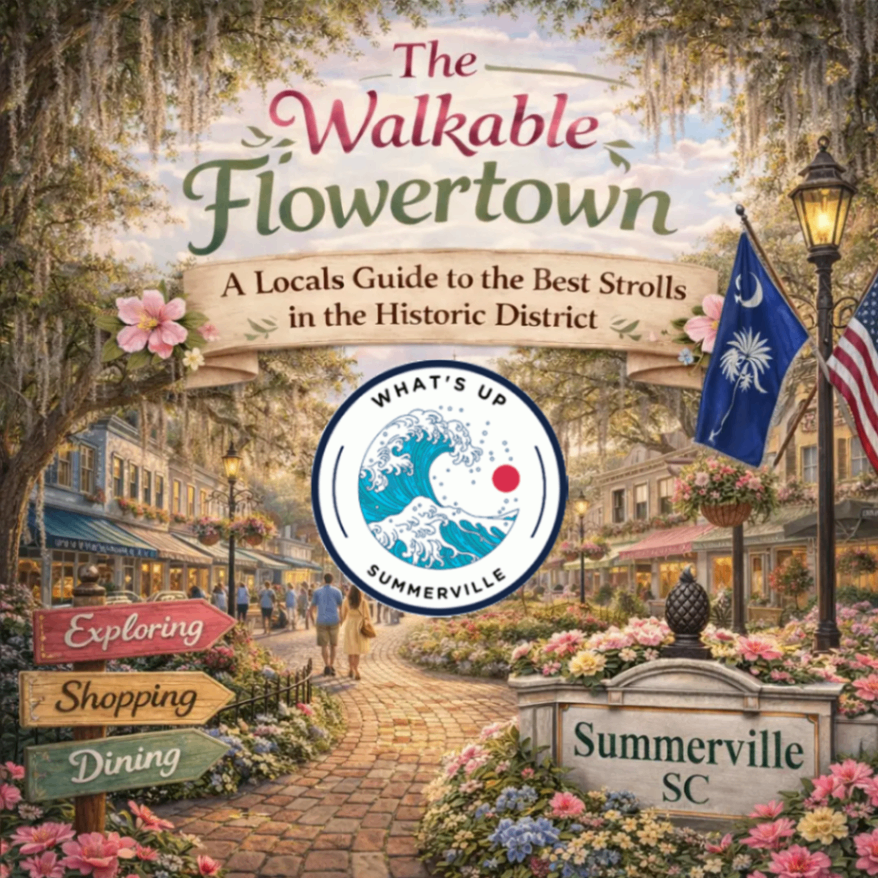
- Walkability — Summerville’s design encourages residents to slow down and enjoy the beauty around them.

You Can Still See Why Today
You don’t have to wait for the Flowertown Festival to understand why this name stuck. Summerville is a “Flowertown” 365 days a year, though the peak color happens from mid-March through mid-April.
Best Places to Take a Stroll
- Azalea Park — Located at the corner of South Main Street and West 5th South Street, this is the crown jewel of our public gardens.
- The Historic District — Take a slow drive or walk down South Main Street and the surrounding avenues to see private gardens that rival the public ones.
- Hutchinson Square — The center of downtown, where the greenery provides a perfect backdrop for our local shops and restaurants.
- Main Street Neighborhoods — Even the residential side streets off the main thoroughfare offer hidden floral gems during peak bloom.
Get in Touch: Local Highlights
The Flowertown identity wouldn’t be possible without the organizations that maintain our parks and host our historic events.
Summerville Family YMCA
The organizers of the annual Flowertown Festival and a pillar of our community’s health and wellness.
- Website: https://www.summervilleymca.org/
- Phone: 843-871-9622
- Instagram: @summervilleymca
Sculpture in the South
The organization responsible for the beautiful bronze statues you see throughout Azalea Park and downtown.
- Website: http://www.sculptureinthesouth.com/
- Phone: 843-851-7800

Discover the Story for Yourself
Every street, building, and landmark in Summerville has a story to tell. Whether it’s the history of the “healing pines” or the legacy of the gardeners who turned our town into a floral paradise, there is always something new to discover.
Next time you see a “Flowertown” sign, remember that it’s a tribute to a century of community pride and a deep love for the natural world. We’re more than just a town; we’re a living, breathing garden.
Support Local • Love Summerville