
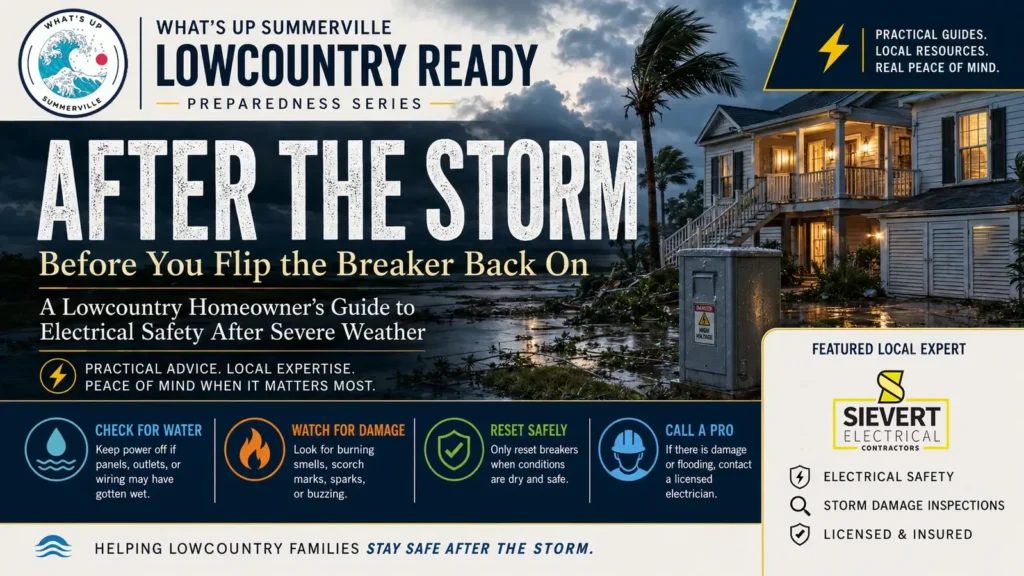
When the wind dies down and power begins returning, most of us want to get the lights, air conditioning, refrigerator, and everything else running again as quickly as possible. But after severe weather, restoring power is not always as simple as flipping a breaker.
Heavy rain, flooding, lightning, fallen limbs, and power surges can damage electrical equipment in ways that are not immediately visible. Some problems may be easy to spot, while others can remain hidden inside panels, outlets, appliances, or wiring.
Taking a few minutes to look for warning signs—and knowing when to stop and call a professional—can help prevent electrical shock, fire, or further damage to your home.
Start Outside
Before checking anything inside, take a careful look around the property.
Stay away from fallen power lines, damaged utility poles, or wires touching trees, fences, vehicles, or standing water. Always assume a downed line is energized, even when the surrounding area appears to be without power.
Report damaged utility equipment directly to the power company. If a line is creating an immediate danger, call 911.
Never attempt to move limbs, debris, or other objects that are touching electrical lines.
Downed Power Line Safety
Stay back, keep others away, and assume every downed wire is energized. Do not drive over it, touch anything in contact with it, or attempt to move nearby debris.

Check for Water Before Restoring Power
Water and electrical systems are a dangerous combination.
If water entered your home, garage, crawlspace, or electrical-panel area, do not touch the breaker panel while standing in water or on a damp surface. Do not switch the power back on simply because the water has receded.
Outlets, switches, circuit breakers, wiring, appliances, and other electrical components may retain moisture, sediment, or corrosion. Equipment that looks dry from the outside may still be unsafe internally.
Water-damaged electrical equipment should be evaluated by a qualified professional before being returned to service. Energizing it without a proper inspection can create a risk of shock, fire, or additional damage.
In some cases, equipment may be repairable. Other components may need to be replaced. That decision should not be based on appearance alone.
When Water Reaches Electrical Equipment
Leave the affected power off. Do not open panels, remove outlet covers, test wiring, or reconnect water-exposed appliances yourself. Contact a licensed electrician for an inspection.
Look and Listen for Warning Signs
Even when there was no obvious flooding, a storm can still affect your electrical system.
Leave the affected power off and contact a licensed electrician if you notice:
- a burning or unusual electrical smell
- buzzing, crackling, or popping sounds
- scorch marks or discoloration around an outlet, switch, or panel
- warm outlets, switches, breakers, or electrical panels
- lights that continue flickering after utility power has stabilized
- appliances that suddenly operate improperly
- sparks or visible electrical damage
- a breaker that trips again after being reset
- damage to the electrical service, meter base, mast, panel, or exterior wiring
Electrical damage is not always visible. A professional can inspect areas and equipment that cannot be safely evaluated through a basic visual check.
When Is It Safe to Reset a Breaker?
If the home remained dry, there is no visible electrical damage, and you are standing in a safe, dry location, a single tripped breaker may sometimes be reset.
Move the breaker fully into the off position before switching it back to on.
If it trips again, leave it off.
A repeatedly tripping breaker is a warning that something may be wrong. Do not keep resetting it to see whether it will eventually stay on. A licensed electrician can determine whether the cause is an overloaded circuit, damaged wiring, a faulty appliance, moisture, or another electrical problem.
Never touch a circuit breaker or replace a fuse with wet hands or while standing on a wet or damp surface.
One Reset Only
If a breaker trips again after being reset, leave it off. Repeatedly resetting it can increase the risk of overheating, equipment damage, or fire.
Bring Appliances Back Gradually
When power returns after a widespread outage, avoid switching everything on at once.
Begin with essential equipment and allow a few minutes between larger electrical loads, such as:
- air-conditioning systems
- water heaters
- refrigerators and freezers
- washing machines and dryers
- well or sump pumps
- major kitchen appliances
Turning equipment back on gradually makes it easier to notice whether a particular appliance or circuit is creating a problem.
Do not reconnect or operate an appliance that was exposed to water until it has been professionally evaluated. Water can damage internal components and create both shock and fire hazards.

Utility Problem or Home Electrical Problem?
Some issues should be reported to the utility company. Others require a licensed electrician.
Contact the utility company for:
- downed or low-hanging power lines
- damaged utility poles
- a neighborhood-wide outage
- damage involving utility-owned equipment
- problems on the utility side of the electrical service
- a meter or exterior service component that has been flooded
Contact a licensed electrician for:
- water inside or near the breaker panel
- flooded outlets, switches, wiring, or appliances
- damaged breakers, panels, meter bases, service masts, or exterior wiring
- repeated breaker trips
- burning smells, buzzing, heat, sparks, or discoloration
- storm or surge damage affecting the home
- part of the home remaining without power after utility service has been restored
- an inspection before power is restored following flooding
When you are uncertain which side of the system is affected, contact the utility company or a licensed electrician and explain what you are seeing. Leave the affected circuit or main power off until the problem can be properly evaluated.
Know When to Stop and Call a Professional
Homeowners can safely look for visible damage from a distance, avoid downed lines, unplug unaffected equipment when appropriate, and keep damaged circuits turned off.
Opening an electrical panel, removing covers, testing damaged wiring, or attempting repairs after flooding or storm damage should be left to a licensed professional.
A professional inspection is especially important when:
- water reached any part of the electrical system
- the home sustained lightning or significant wind damage
- the meter, mast, panel, or service entrance appears damaged
- breakers continue to trip
- outlets, switches, or panels feel warm
- you smell burning or hear buzzing or crackling
- appliances were submerged or exposed to water
- you are not confident the system is safe
Calling a professional is not an overreaction. Electrical systems can remain hazardous after the visible signs of a storm are gone, and hidden damage can become more serious once power is restored.
When in Doubt, Leave It Off
If you are unsure whether a circuit, appliance, panel, or electrical component is safe, leave it off until it can be inspected by a licensed electrician.
A Safer Return to Normal
The period after a storm can feel like a race to clean up, cool the house down, save food, and get everything working again.
Electrical safety is one area where taking a little extra time matters.
Power returning does not automatically mean every circuit, appliance, or piece of electrical equipment is safe to use. Checking for water, visible damage, unusual smells, sounds, heat, and repeated breaker trips can help identify trouble—but professional evaluation is the safest next step whenever damage is suspected.
Leave questionable equipment off, avoid attempting repairs yourself, and ask a licensed electrician to evaluate anything that may have been affected.

Featured Local Resource
Sievert Electrical Contractors provides residential and commercial electrical services in the Summerville area. If your home or business may have experienced storm, surge, or water-related electrical damage, a licensed electrician can inspect the affected system and help determine what can safely be restored, repaired, or replaced.
Lowcountry Ready Series
Practical information to help Summerville and Lowcountry residents prepare for severe weather, power outages, flooding, and other emergencies.