
Presented by Sievert Electrical Contractors — a What’s Up Summerville Founding Member
Winter in the Lowcountry doesn’t always announce itself. Sometimes it just shows up overnight.
That’s exactly what happened this past weekend, when the National Weather Service issued a freeze warning for Dorchester and inland Berkeley counties, with temperatures forecast as low as 29 degrees.
And when the temperatures drop around Summerville, a few familiar things happen. Space heaters come out of storage. Holiday lights start appearing on porches and rooftops. Heating systems work harder, and kitchens get busy with holiday cooking.
Individually, these are ordinary parts of the season. Together, they can place additional demands on your home’s electrical system.
The good news? A little preparation now can help prevent overloaded circuits, damaged outlets, and unsafe shortcuts later.
Space Heaters: Small Appliance, Serious Electrical Demand
When a cold snap arrives, a portable space heater can make a chilly bedroom, home office, or living room much more comfortable.
But don’t underestimate how much electricity one can use. Space heaters can place a substantial load on a household circuit, particularly when other appliances are running at the same time.
Before plugging one in, remember these basic precautions:
- Use a wall outlet. Plug an electric space heater directly into a wall outlet. Never connect one through an extension cord or power strip.
- Avoid sharing the circuit. Don’t run another space heater or other high-demand appliance on the same circuit.
- Keep three feet of clearance. Bedding, curtains, furniture, clothing, and anything else that can burn should stay at least three feet away.
- Choose a stable location. Place the heater on a solid, level surface where it won’t easily be knocked over.
- Turn it off when you’re not there. Switch it off before leaving the room or going to sleep.
Inspect the cord and plug before using the heater, too. A damaged cord, loose connection, or unusually hot plug is a reason to stop using it.
ELECTRICAL SAFETY NOTE
If your space heater repeatedly trips a breaker, don’t keep resetting it or move the heater around until something works. Stop using it and have the circuit evaluated. A tripping breaker is a warning worth taking seriously.
Holiday Lights: Keep the Glow, Skip the Overload
Few things make a Lowcountry neighborhood feel more festive than holiday lights.
But there’s a difference between hanging a few strands of LED lights and building a display with inflatables, projectors, illuminated decorations, and multiple extension cords.
Before decorating, take a few minutes to check your equipment.
- Follow the manufacturer’s connection limits. Don’t connect more light strands end-to-end than the instructions allow.
- Use outdoor-rated equipment outside. Lights, cords, and electrical connections exposed to the weather need to be suitable for outdoor conditions.
- Check GFCI protection. Outdoor receptacles should have appropriate ground-fault circuit-interrupter protection to help reduce shock hazards.
- Inspect before installing. Replace damaged strands, cracked sockets, frayed insulation, and broken plugs rather than attempting makeshift repairs.
- Use timers when practical. There’s no reason for every decorative light to stay on all night.
It’s also worth remembering that an extension cord isn’t a substitute for permanent outdoor wiring.
If you’re considering more elaborate lighting or a year-round installation, take a look at our guide, Light Up the Lowcountry: Outdoor Lighting That Works Beyond the Holidays. It covers fixture placement, electrical considerations, and ways to make outdoor spaces useful beyond the holiday season.
SIEVERT PROJECT PHOTOS
Landscape lighting at Del Webb
Three photos from a Sievert landscape-lighting project. These illustrate permanent outdoor lighting, not temporary holiday lights.
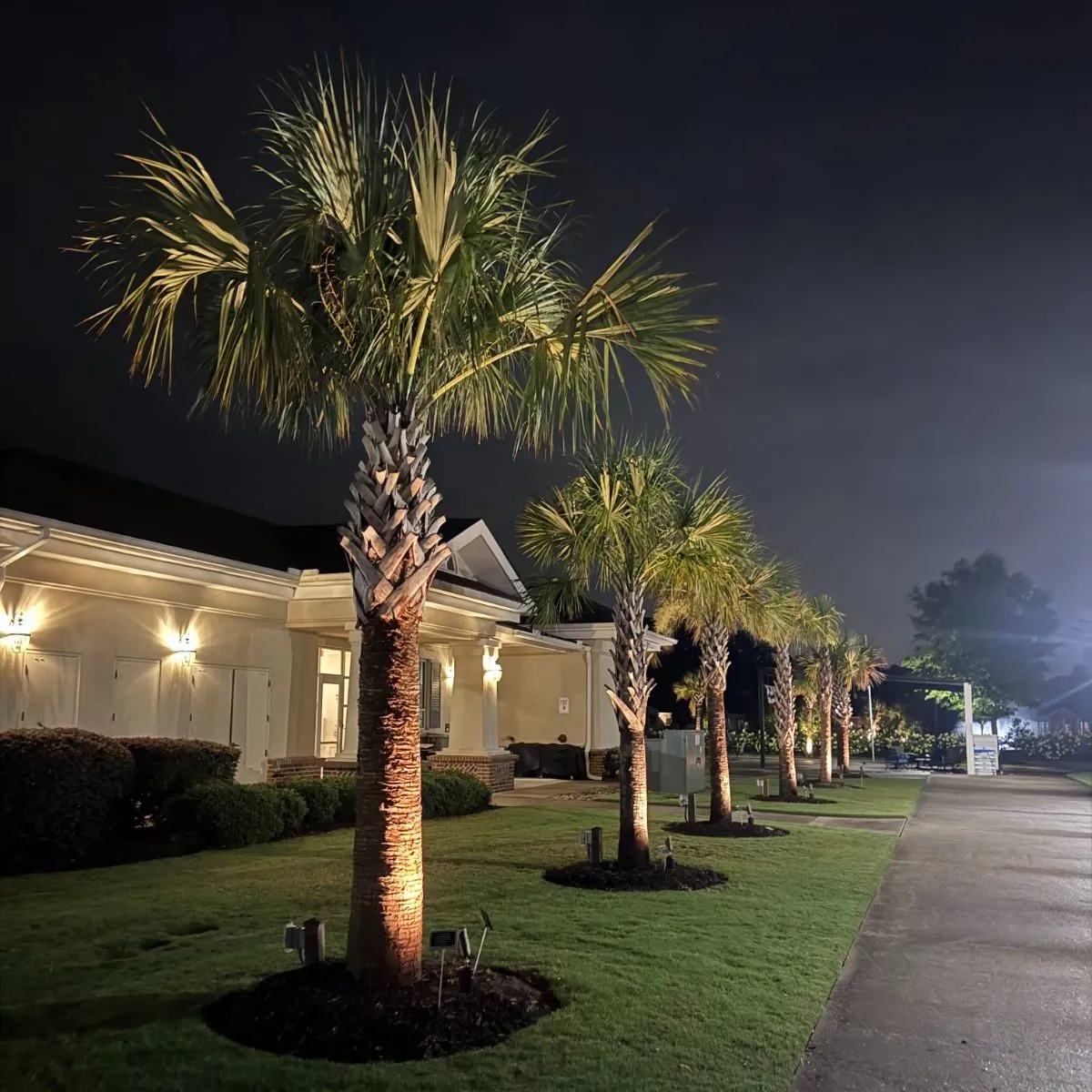
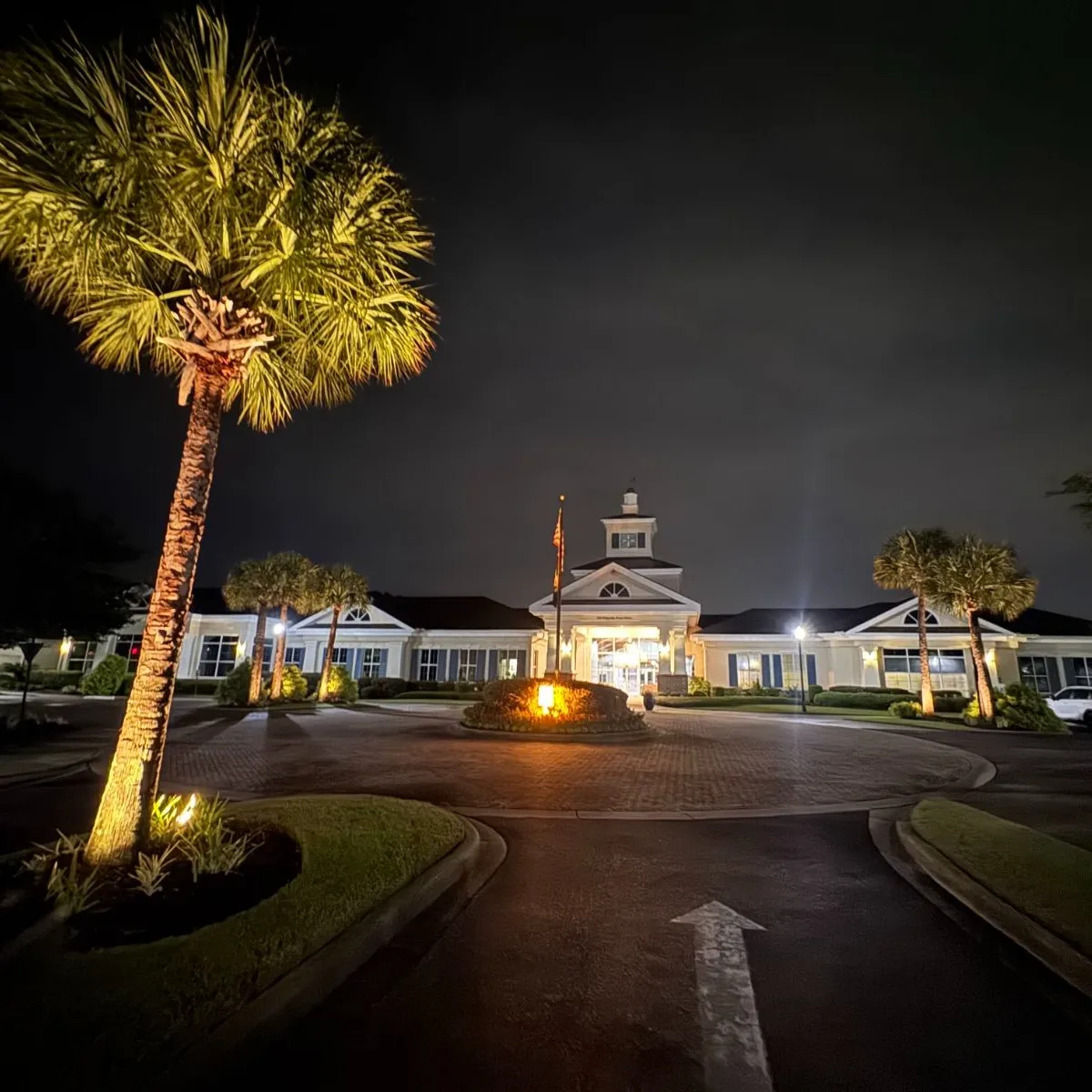
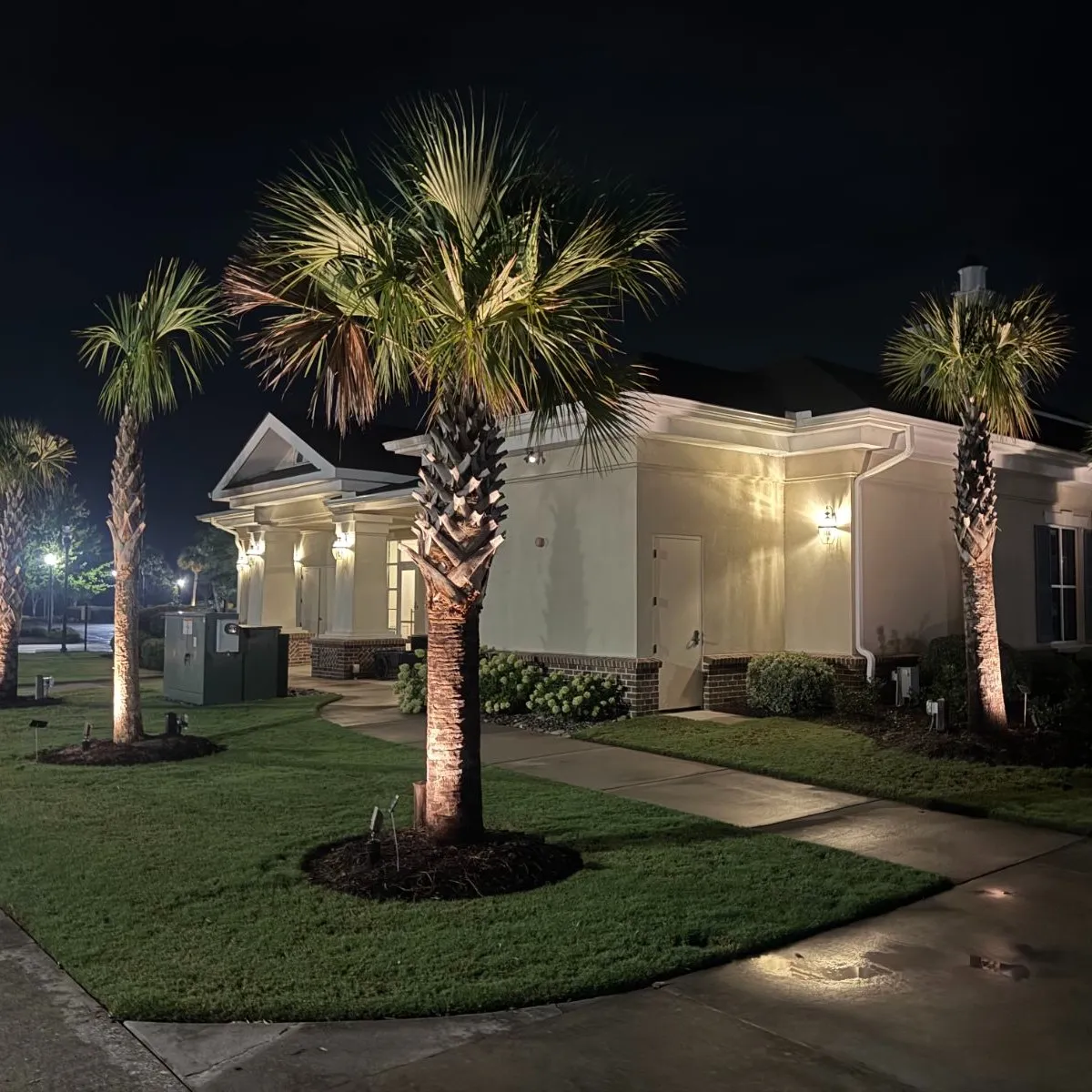
Swipe or scroll sideways to view more photos. Select any image to open the full-size version.
Your Electrical Panel Has to Handle It All
Most homeowners don’t think about the electrical panel until something stops working.
But consider what might be happening on a cold December evening: the heating system is running, dinner is cooking, the dishwasher is going, a space heater is warming the back bedroom, and holiday decorations are glowing outside.
Every home has limits on how much electrical demand its circuits and service can safely support.
A breaker that trips during an overload is performing an important protective function. But repeated trips can indicate a problem that shouldn’t be ignored.
Other warning signs include flickering lights, unusually warm outlets or electrical equipment, buzzing sounds, and signs of scorching or discoloration.
If you notice those symptoms, avoid attempting electrical repairs yourself. A qualified electrician can help identify whether the issue involves a particular circuit, damaged equipment, or the home’s electrical capacity.
For a deeper look, read Is Your Electrical Panel Ready for Modern Life?, another Lowcountry homeowner guide featuring Sievert Electrical Contractors.
SIEVERT PROJECT PHOTOS
Residential electrical panel installation
Two photos of a residential panel installation with new breakers, surge protection, and a labeled panel schedule.
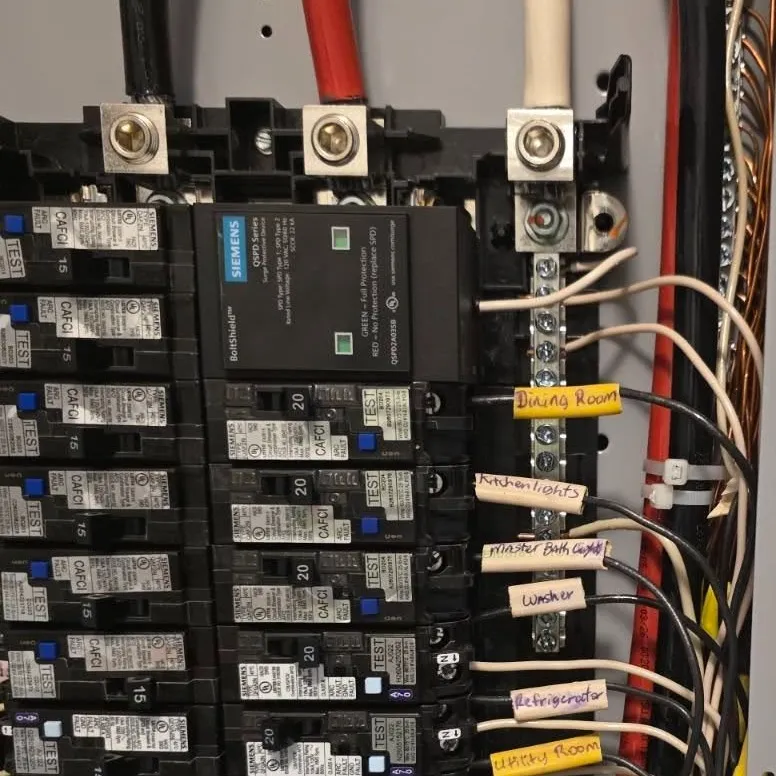
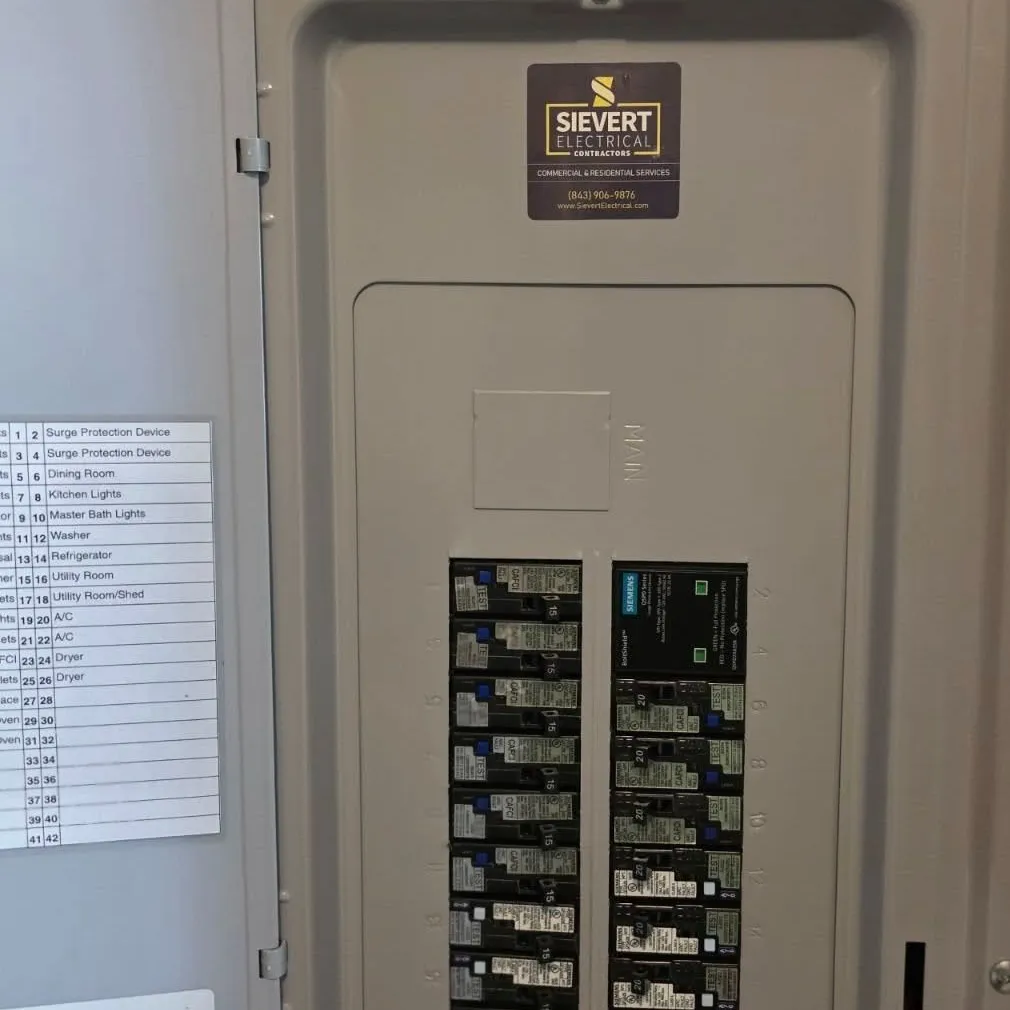
Swipe or scroll sideways to view more photos. Select any image to open the full-size version.
Power Outages Aren’t Just a Hurricane-Season Problem
We tend to associate power outages with summer thunderstorms and hurricane season, but cold-weather outages deserve preparation, too.
Wind, falling branches, equipment problems, and winter weather can interrupt electrical service. And when temperatures are near freezing, losing the ability to heat your home becomes a concern.
If your household has a generator, winter is a good time to check that it’s ready.
If You Have a Standby Generator
Make sure the system is operating according to the manufacturer’s instructions, completing its scheduled self-tests, and receiving routine maintenance.
A generator that worked during the last outage isn’t automatically ready for the next one. Batteries, connections, and other components can still need attention.
Sievert Electrical Contractors is an authorized Generac dealer offering standby and portable generator sales and routine maintenance.
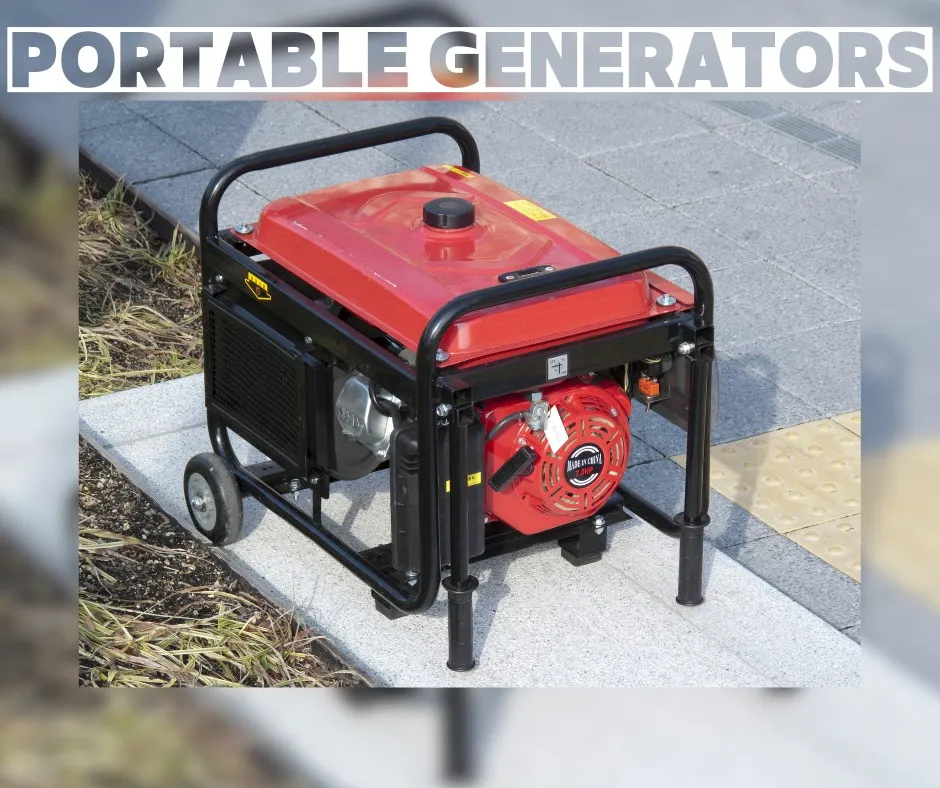
If You Use a Portable Generator
The safety rules don’t change with the season.
- Operate it outdoors only. Never run a portable generator inside a house, garage, enclosed porch, or other enclosed or partially enclosed area.
- Keep it away from openings. Position it at least 20 feet from doors, windows, and vents, with exhaust directed away from the home.
- Never backfeed your home. Plugging a generator into a wall outlet can energize utility lines and endanger electrical workers.
- Use proper transfer equipment. A qualified electrician can help determine the appropriate safe connection for supplying household circuits.
- Check carbon monoxide alarms. Working alarms are an important safeguard whenever combustion-powered equipment is in use.
Generator exhaust contains carbon monoxide, a dangerous gas that cannot be seen or smelled. Keeping the generator outside and well away from the home is essential.
For help understanding the different generator options, read Before the Lights Go Out: A Lowcountry Homeowner’s Guide to Backup Generators.
A Five-Minute Winter Electrical Check
You don’t need a complicated checklist to start preparing. A quick walk through the house can help identify a few issues before the next cold snap arrives.
YOUR WINTER ELECTRICAL CHECKLIST
- Check space heater cords, plugs, and placement.
- Inspect holiday light strands and outdoor connections.
- Make sure electrical panels remain accessible.
- Pay attention to flickering lights and repeated breaker trips.
- Check generator readiness and carbon monoxide alarms.
- Know where your flashlights and backup batteries are located.
Most of these steps take only a few minutes. And if something doesn’t look right, it’s better to have it evaluated before the next stretch of cold weather arrives.
Stay Warm, Summerville
Winter electrical preparation isn’t about expecting the worst every time temperatures dip below freezing.
It’s about good habits: using space heaters safely, keeping holiday lighting within its limits, recognizing warning signs from your electrical system, and having an outage plan before you need one.
In the Lowcountry, we’re pretty good at preparing for hurricanes. A little of that same thinking can help us get through the colder months safely, too.
Stay warm, Summerville. And stay safe.
A Local Electrical Contractor Worth Knowing
Sievert Electrical Contractors is a locally owned business serving the greater Charleston area with residential, commercial, and light industrial electrical services.
Led by Steven Sievert, a certified Master Electrician with more than 15 years of experience, the company handles electrical panels and service upgrades, generator sales and routine maintenance, EV chargers, lighting, and other electrical projects.
Sievert provides a one-year warranty on parts and labor and is a proud What’s Up Summerville Founding Member.
FEATURED LOCAL RESOURCE
Sievert Electrical Contractors
Locally owned electrical contractor serving the greater Charleston area. Authorized Generac dealer and What’s Up Summerville Founding Member.
Phone: (843) 906-9876
Email: contact@sievertelectrical.com
Address: 8300 Dorchester Rd, Ste B, North Charleston, SC 29418
Hours: Monday–Friday, 7:30 AM–4:00 PM
Website: sievertelectrical.com
WHAT’S UP SUMMERVILLE
Lowcountry Ready
Practical information to help Summerville and Lowcountry residents prepare for severe weather, power outages, flooding, and other emergencies.
Explore Lowcountry Ready →Safety guidance: U.S. Fire Administration and Ready.gov. Local weather reference: National Weather Service Charleston, November 14–15, 2026.