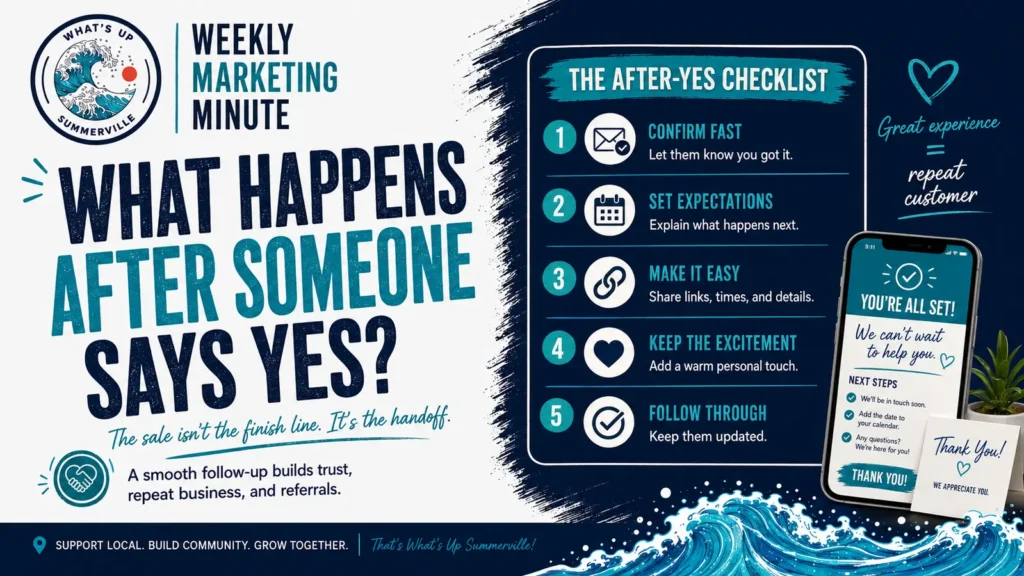
Getting someone to say yes can take a lot of work.
They found your business. They checked out your page. Maybe they read some reviews, asked a question, or compared a few options.
Then it happens.
They book the appointment.
They approve the quote.
They place the order.
They say, “Let’s do it.”
For a business, that can feel like the finish line.
It isn’t.
The sale is really the handoff between earning someone’s attention and earning their trust.
And what happens immediately after that “yes” can shape the entire customer experience.
Don’t Leave Them Wondering
Think about the last time you made a purchase or booked a service and then heard… nothing.
Did the order actually go through?
Are they going to call me?
Do I need to do something?
Did they even get my message?
Even when everything is perfectly fine behind the scenes, silence creates uncertainty.
A simple confirmation can eliminate most of that.
It doesn’t have to be complicated:
“Thanks! We received your request and will be in touch by tomorrow afternoon.”
Now the customer knows their message went through, someone is handling it, and when they should expect to hear from you.
That little bit of communication makes your business feel organized before you’ve even started the work.
Tell Them What Happens Next
Acknowledging the customer is step one.
Step two is making sure they know what comes next.
Customers generally don’t expect everything to happen instantly.
They do want to know what to expect.
If your normal turnaround is three business days, tell them.
If someone from your team will call before the appointment, tell them.
If they need to bring something, complete a form, send photos, or arrive 15 minutes early, let them know before it becomes a problem.
Clear expectations prevent a lot of unnecessary back-and-forth later.
A contractor might say:
“Your estimate has been approved. Our scheduling team will contact you within two business days to choose an installation date.”
A photographer might send:
“You’re booked! I’ll send your session guide and location details about a week before your appointment.”
A bakery might confirm:
“Your order is confirmed for Saturday pickup between 10 AM and noon. We’ll send a reminder Friday.”
Nothing fancy.
Just clear.
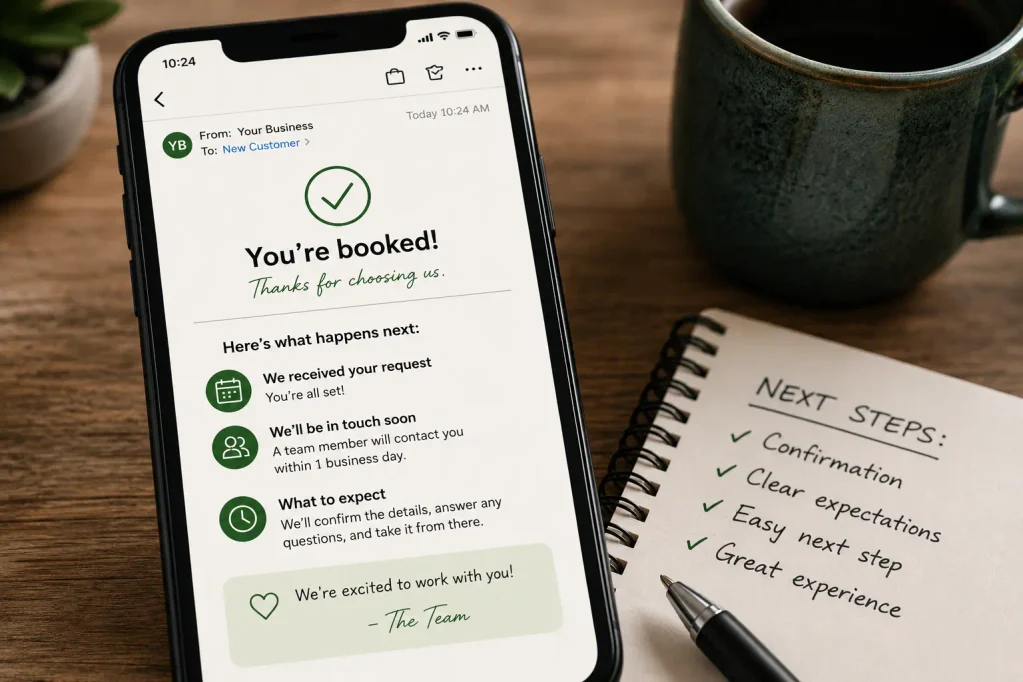
Make the Next Step Easy
Once someone has decided to do business with you, don’t make them work harder than necessary.
If they need to fill out a form, send them the link.
If they need directions, include the address.
If there’s a deposit remaining, make the payment option obvious.
If they need to choose between three options, give them those three options instead of sending them digging through your website.
Every unnecessary step is another opportunity for confusion or frustration.
The easier you make it for someone to move forward, the better the experience feels.
Keep Some of the Excitement
There’s usually a little moment of excitement when someone finally decides to move forward.
They booked the family photos.
They ordered the birthday cake.
They finally hired someone to tackle that project they’ve been putting off.
Your response afterward can either build on that excitement or turn the interaction into a cold transaction.
A genuine “We’re excited to work with you” or “Thanks for choosing us” can go a surprisingly long way.
It doesn’t need to sound like a corporate autoresponder.
Let some of your business’s personality show.
Payment Shouldn’t Be Where Communication Stops
There’s a big difference between silence before and after someone pays you.
Before the sale, a delayed response might make someone wonder whether you want their business.
After they’ve paid, that same silence can make them wonder whether they made the right decision.
You don’t have to constantly message the customer, but important milestones are worth communicating.
Order received.
Appointment confirmed.
We’re on the way.
Your item is ready.
Here’s what happens next.
Those little touchpoints provide reassurance and keep customers from having to chase you for information.
The Experience After the Sale Is Marketing, Too
Marketing doesn’t stop once the customer buys.
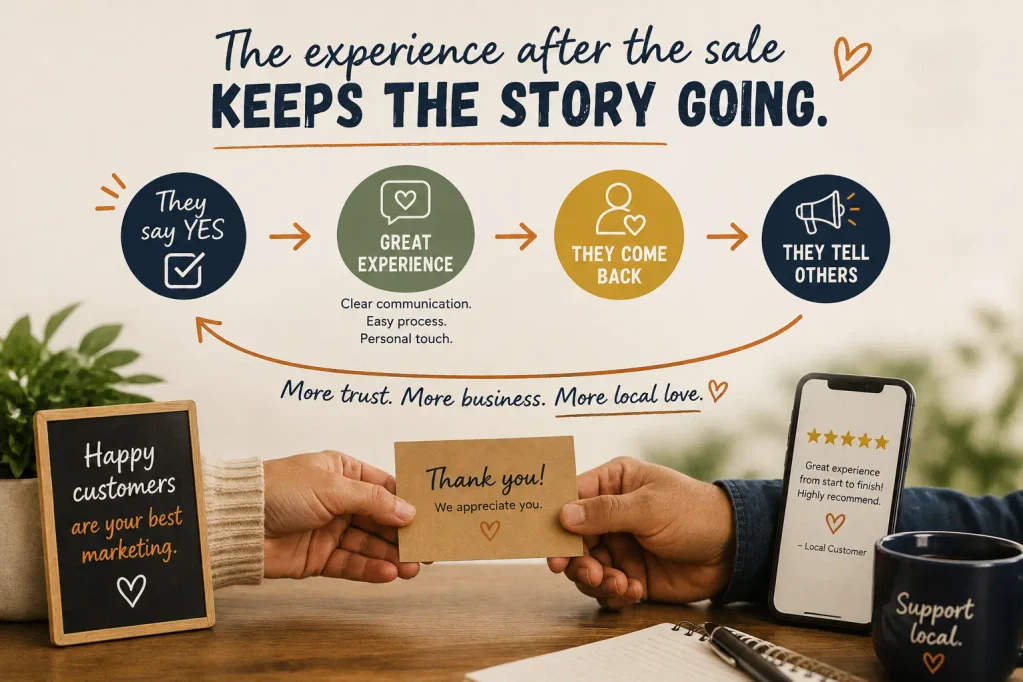
A customer who feels informed, appreciated, and taken care of is much more likely to come back, leave a good review, or tell someone else about your business.
That means the confirmation email, the follow-up message, the pickup experience, the appointment reminder, and even the way you say thank you can all become part of your marketing.
You worked hard to earn the first yes.
A good experience afterward helps earn the next one.
Look at Your Own “After Yes” Experience
Here’s a simple exercise for this week:
Go through your business as if you were a brand-new customer.
What happens immediately after someone:
- Books an appointment?
- Places an order?
- Fills out your contact form?
- Accepts a quote?
- Pays an invoice?
- Signs up for your service?
Do they immediately know that you received it?
Do they know what happens next?
Do they know when they should expect to hear from you?
If not, that may be one of the easiest customer-experience improvements you can make.
You already did the hard part.
You got them to say yes.
Now make sure the experience that follows gives them a reason to feel good about saying it.
Getting the yes earns the customer. What you do next starts earning the repeat customer.