
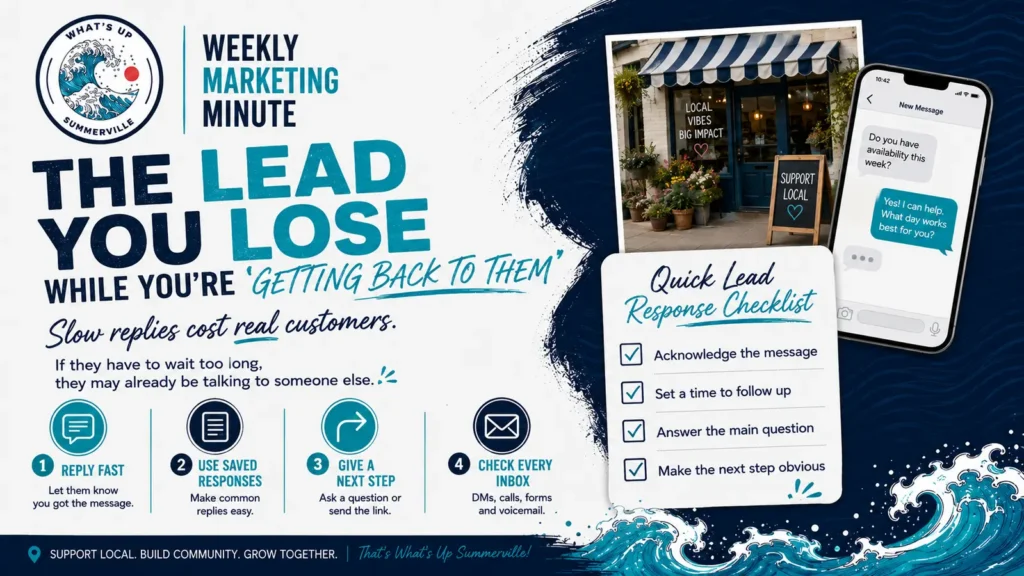
A potential customer sends you a message.
They ask if you have availability. They want a quote. They need to know whether you carry a certain product. Maybe they simply ask, “How much?”
You see the notification, but you’re in the middle of something.
“I’ll get back to them in a little bit.”
A few hours pass.
Then dinner happens. The kids need something. Another customer calls. You remember the message later that night—or maybe the next morning.
By the time you reply, they have already booked someone else.
The problem was not your price, your reputation, or the quality of your work.
You were simply too late.
Your Lead Probably Asked Someone Else, Too
When someone reaches out to a local business, it is easy to picture them patiently waiting for your answer.
That is usually not what is happening.
They may have messaged three contractors.
They may have called two photographers.
They may be comparing several restaurants for catering.
They may have opened five browser tabs looking for the same product.
The business that responds first does not automatically win—but being available while the customer is actively making the decision gives you a major advantage.
That customer is already interested.
You do not have to convince them that they need the service. They came looking for it.
The goal is to avoid losing that opportunity in the gap between “New Message” and “I’ll answer that later.”
Fast Does Not Mean Dropping Everything
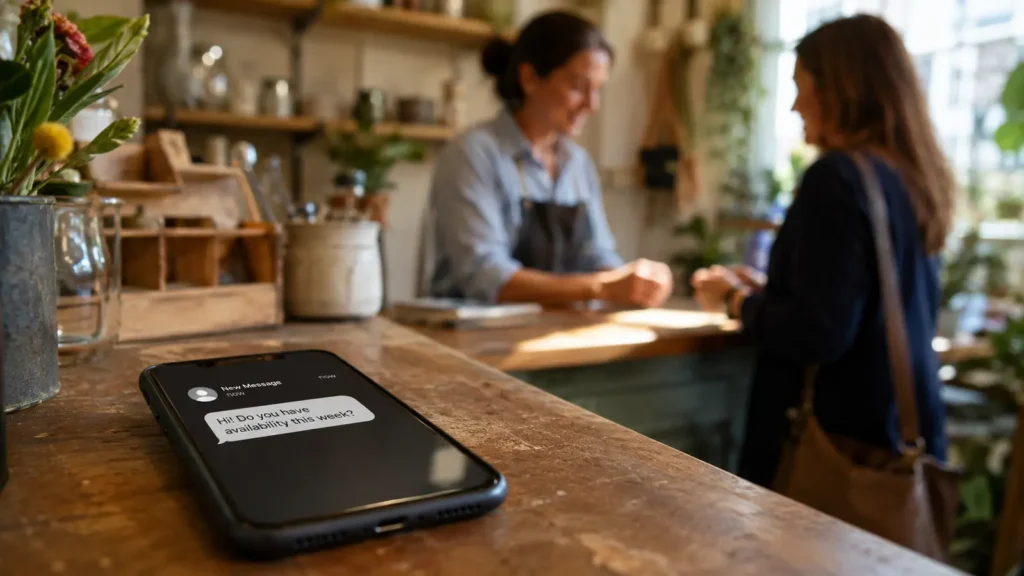
Small business owners cannot sit beside their phones waiting for messages all day.
You have customers in front of you. Jobs to complete. Food to prepare. Employees to manage. Deliveries to make.
The solution is not necessarily answering every inquiry within 30 seconds.
It is making sure the customer knows you received it.
A simple response can buy you time:
“Thanks for reaching out! I’m with a customer right now, but I’ll get back to you this afternoon.”
That takes seconds.
More importantly, the customer now knows someone is on the other side of the message.
Compare that with silence.
Silence leaves them wondering whether the business is open, whether anyone checks the account, or whether they should simply contact the next business on their list.
Make the First Response Easier
If answering leads constantly feels like work, look at the questions you answer repeatedly.
Do people always ask about pricing?
Create a saved response explaining your starting price or how estimates work.
Do they ask about availability?
Have a quick response ready asking for the date, service and basic information you need.
Do customers constantly ask where you are located?
Make sure your address, service area and hours are easy to find before they ever have to message you.
Your website, Google Business Profile and social pages should handle the easy questions.
Saved replies should handle the repetitive ones.
Your time should be spent on the conversations that actually need you.
Give People a Clear Next Step
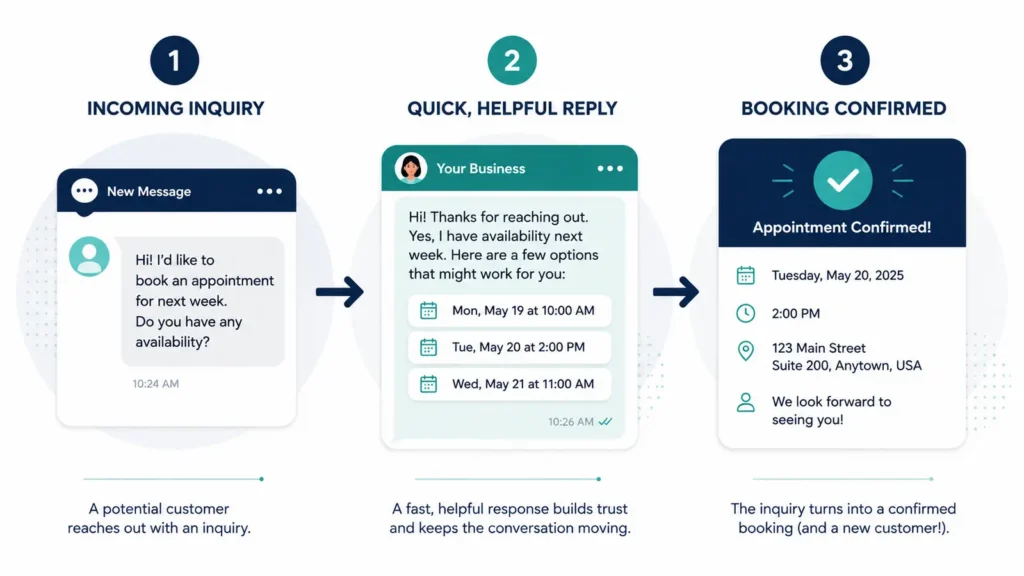
One of the easiest ways to lose a lead is making the customer do too much work.
Imagine someone messages:
“Do you have availability next Saturday?”
And the response is:
“Yes.”
Technically, you answered the question.
But now the customer has to start the conversation again.
Instead:
“Yes! We currently have availability next Saturday. What time are you looking for? If you send me your name and a few details about what you need, I can check everything for you.”
Now the conversation is moving forward.
Whenever possible, end your response with the next step.
Send the booking link.
Ask the qualifying question.
Offer the available appointment times.
Tell them what information you need for an estimate.
Make it easy to keep saying yes.
Check the Places Where Leads Actually Arrive
Not every lead comes through the contact form on your website.
Someone may message your Facebook Page.
Someone else may send an Instagram DM.
Another person might reply to an old post.
Someone may call, leave a voicemail and then send a text five minutes later.
And occasionally, a message ends up buried in a request or spam folder.
Think about everywhere a potential customer can contact your business and make checking those places part of your routine.
You do not necessarily need to monitor everything constantly.
You just need a system that prevents inquiries from disappearing for two days.
You Already Did the Hard Part
Businesses spend a lot of time trying to generate leads.
They post on social media.
They run ads.
They attend networking events.
They sponsor community activities.
They build websites.
They ask customers for referrals.
All of that effort is designed to accomplish one thing:
Get someone interested enough to contact you.
When they finally do, do not make the easiest part of the process the place where you lose them.
You do not have to respond instantly.
You do not need a complicated sales system.
You just need to make sure “I’ll get back to them” does not quietly turn into “I forgot to get back to them.”
Because sometimes the customer you think is still waiting for your reply is already talking to the business that answered first.
Weekly Marketing Minute
Simple ideas to help local businesses market a little smarter.
Support Local • Love Summerville