
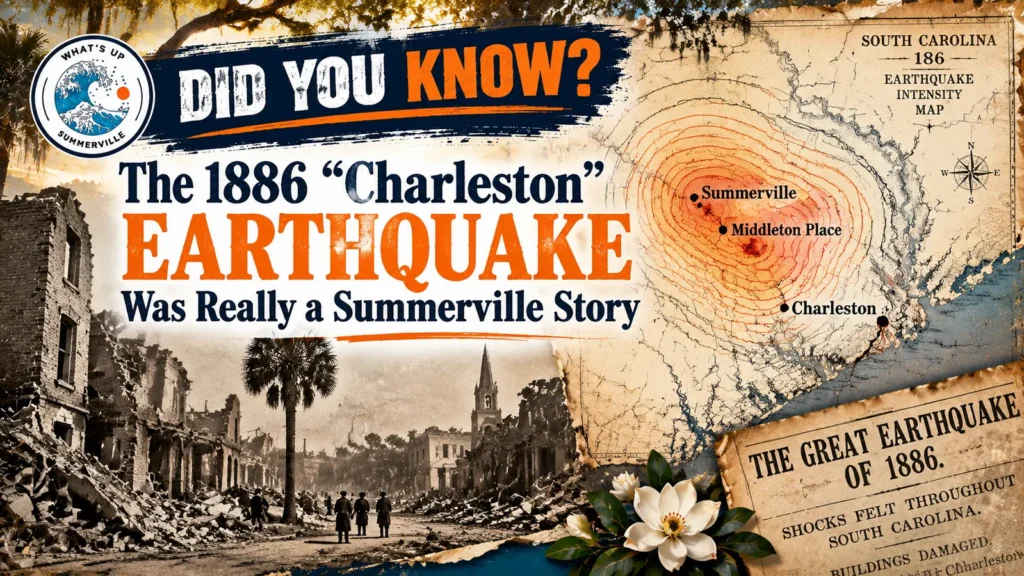
When people hear about the 1886 Charleston earthquake, they usually picture Charleston.
But one of the most important parts of that story happened much closer to home.
On the night of August 31, 1886, one of the strongest earthquakes ever recorded in the eastern United States shook South Carolina. While Charleston became the name attached to the event, the area around Summerville and Middleton Place was closely connected to the earthquake’s source and strongest effects.
More than a century later, the earthquake remains one of the most fascinating chapters in Lowcountry history — and a reminder that the story of Summerville is shaped by more than the buildings and streets we see today.
The earthquake may carry Charleston’s name…
but Summerville is part of the story.
A Charleston Name. A Summerville Connection.
The earthquake became known as the “Charleston earthquake” because Charleston was the largest city affected and where much of the damage was documented.
However, studies of the event connect the earthquake’s source area to the Middleton Place–Summerville seismic zone, an area that remains important in earthquake research today.
🏛️ The Name History Remembers
Charleston
The city that gave the earthquake its name and where much of the destruction was recorded.
📍 The Area at the Center
Middleton Place • Summerville
The region connected to the earthquake’s source and one of the strongest shaking areas.
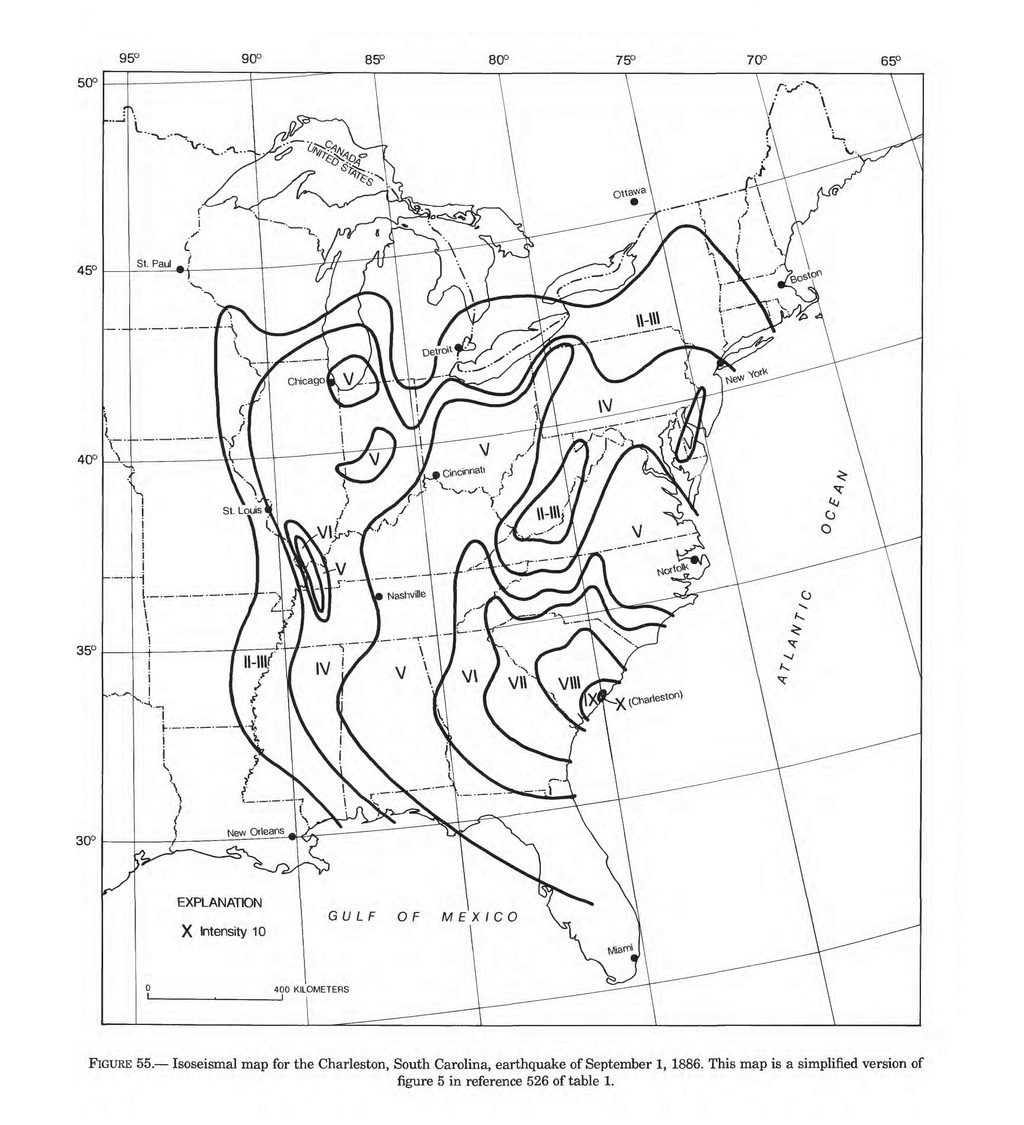
The earthquake was named for Charleston, but the effects extended into the Summerville and Middleton Place area.
Source: U.S. Geological Survey
The Night the Ground Moved
Just before 10 PM on August 31, 1886, residents throughout the Lowcountry experienced powerful shaking that damaged homes, churches, and other structures.
Buildings shifted. Chimneys collapsed. Walls cracked. Objects were thrown from shelves as the ground moved beneath communities throughout the region.
Aftershocks continued following the initial earthquake, keeping residents on edge for days and weeks afterward.
Summerville’s Place in the Earthquake Story
In the late 1800s, Summerville was already known as a retreat among the pine forests, attracting visitors looking for a cooler escape from Charleston.
The earthquake added another chapter to the community’s history — one written not above ground, but beneath it.
Today, the Charleston Seismic Zone remains one of the most studied earthquake areas in the eastern United States. Researchers continue examining the 1886 event to better understand earthquake risks in the region.
A Reminder Beneath Our Feet
Most days, Summerville’s history is visible through its homes, businesses, neighborhoods, and landmarks.
But sometimes history is hidden beneath the surface.
The 1886 earthquake may carry Charleston’s name…
But Summerville is part of the story.
It is another reminder that the history of a place is not only built by what people create — sometimes it is shaped by what happens beneath their feet.
Support Local • Love Summerville