
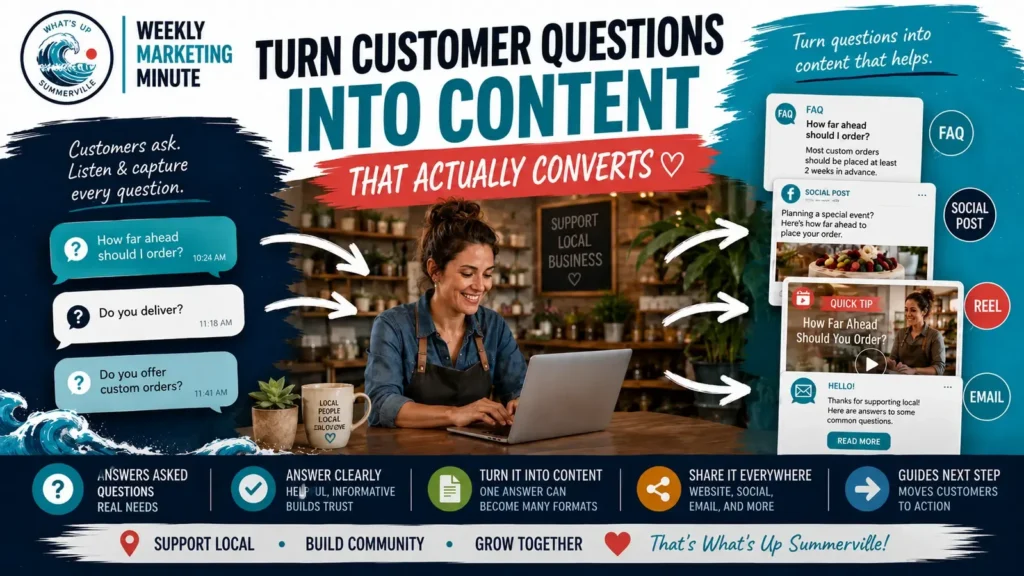
Every business hears the same questions again and again:
- “How much does it cost?”
- “How long does it take?”
- “Do you serve my area?”
- “What makes this different?”
- “Is this right for me?”
Those questions are not interruptions. They are a ready-made content plan.
When one customer asks something, there is a good chance several others are wondering the same thing but have not reached out yet. Answering those questions publicly can build trust, improve your visibility, and help potential customers feel more confident before they contact you. For local business owners in the Summerville area, establishing this trust is the cornerstone of steady growth and community loyalty.
Start With the Questions You Already Hear

You do not need complicated keyword research to find useful content ideas. Start with the conversations already happening in your business every single day.
Look through:
- emails and direct messages
- phone inquiries
- contact-form submissions
- comments on social media
- questions asked during appointments
- objections that come up before a sale
Write down the questions that appear most often. Those are usually the best topics to answer first because they reflect what real customers are already considering before they make a decision.
Answer One Question at a Time
A common mistake is trying to explain everything in one long post. Instead, turn each question into its own piece of content.
A landscaper might create posts such as:
- How often should your lawn be serviced?
- What is included in a basic lawn-care visit?
- When is the best time to install new sod?
- Do you need to be home during service?
A bakery could answer:
- How far ahead should custom cakes be ordered?
- What is the difference between a preorder and a regular order?
- Can menu items be customized?
- How should baked goods be stored?
Each answer can become a social post, website article, short video, email, FAQ entry, or Google Business Profile update.
Be Helpful Before Being Promotional
The strongest answers do not immediately turn into a sales pitch.
Explain the question clearly. Give the customer enough information to understand their options. Then include a natural next step.
For example:
Example Answer:
Most custom orders should be placed at least two weeks in advance, although availability depends on the date and order size. Holiday weekends may require additional notice. To check availability, send us your preferred date, serving size, and design ideas.
That answer is useful on its own, but it also makes it easy for someone to move forward.
Address the Concerns Behind the Question
Sometimes the question being asked is not the real concern.
When someone asks, “How much does it cost?” they may actually be wondering:
- Can I afford this?
- Are there hidden charges?
- What determines the price?
- Is the service worth it?
When someone asks, “How long does it take?” they may be concerned about disruption, deadlines, or whether the business is dependable.
Good content answers both the spoken question and the concern behind it.
Use Real Language
Your customers probably do not use the same terminology you use inside your business.
Build content around the words they actually say. A homeowner may search for “Why does my breaker keep tripping?” rather than “residential circuit overload diagnosis.”
Using familiar language makes your content easier to understand and more likely to match what people actually type into search engines when looking for a local solution.
Reuse Every Good Answer

One customer question can become several pieces of content.
A detailed answer can become:
- a website article
- a short Facebook post
- an Instagram carousel
- a Reel or short video
- an email tip
- an FAQ on your business listing
You do not need a completely new idea every day. You need useful information presented in different formats.
The Bottom Line
Your next customer may already have a question standing between them and a purchase.
Answer it before they have to ask.
The questions you hear every week can become some of your most useful marketing content because they are based on real customer needs—not guesses about what people might care about.
This week, write down the five questions your customers ask most often. Choose one, answer it clearly, and publish it.
That is content with a purpose.
Support Local • Love Summerville.