

If you've felt your house rumble over the past couple weeks, you're not imagining things. Summerville has been experiencing a series of earthquakes, and if you're new to the area (or just didn't realize we had earthquakes here), you might be wondering what's going on.
Let's break down what's been happening, why it's happening, and what you need to know to stay safe and informed.
What's Been Shaking This Month
February 2026 has been unusually active for the Lowcountry. Here's what we've experienced so far:
Tuesday, February 3: A magnitude 2.3 earthquake rattled the area in the afternoon. Not huge, but enough to get people's attention.
Saturday, February 7: This was the big one, a magnitude 2.9 earthquake struck at 10:37 p.m. It was shallow enough that folks across the region felt it. Many residents reported their homes shaking for several seconds, some heard loud noises that sounded like explosions, and a few were actually shaken awake.
Wednesday, February 11: A magnitude 2.5 quake centered about 4.1 miles northwest of Centerville hit around 9:00 p.m.
Thursday, February 12: Just before 4:00 a.m., a magnitude 1.8 tremor occurred north-northwest of Summerville.
Earlier this week: A magnitude 1.6 earthquake in Dorchester County near Kings Grant.
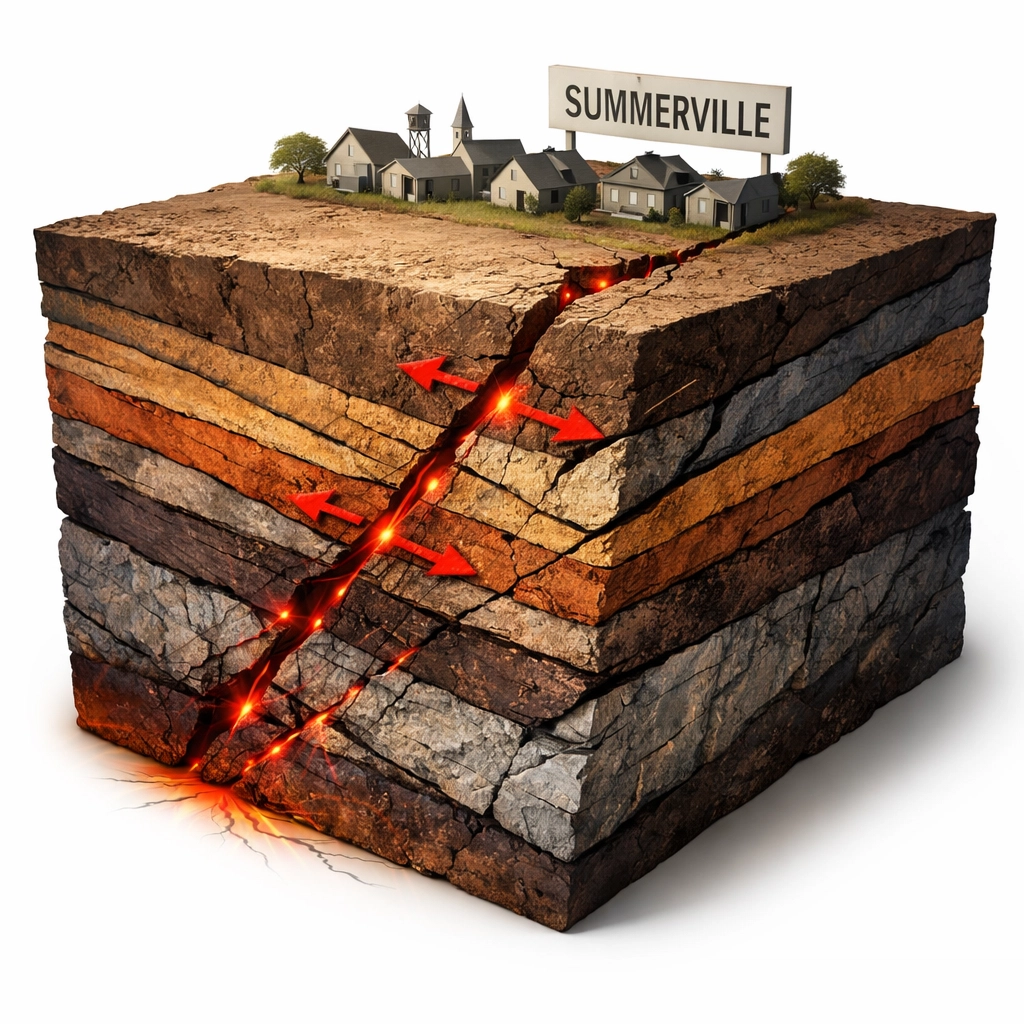
That's six earthquakes in less than two weeks, three of them happening within a 24-hour period. Geologists are calling this an earthquake "swarm," which is a cluster of tremors rather than isolated events.
The good news? Despite all the shaking, there have been no reported injuries or major damage. Still, it's understandably unsettling when your coffee cup starts rattling on the table or you feel your whole house vibrate.
Why Summerville? The Middleton Place-Summerville Seismic Zone
Here's the thing most people don't realize: Summerville sits right on top of one of the most seismically active areas in the eastern United States.
The Middleton Place-Summerville Seismic Zone (MPSSZ) is a fault system that runs through the Lowcountry. Local engineer Gene Brislin put it bluntly when he called our area "a bad spot", a place where geological stress naturally concentrates.
According to the U.S. Geological Survey (USGS), this zone has been producing earthquakes for decades. In fact, South Carolina experiences dozens of earthquakes every year, though most are too small to be felt. When you do feel one, it's because stress has been building up along these ancient fault lines and is suddenly released.
Think of it like this: Deep beneath our feet, massive slabs of rock (tectonic plates) are constantly moving. Sometimes they get stuck. Stress builds up. Eventually, something has to give, and when it does, we feel a shake.
The Big One: August 31, 1886

If you think these recent tremors are significant, consider what happened 140 years ago.
On August 31, 1886, a magnitude 7.0 earthquake struck the Charleston area, one of the most powerful earthquakes ever recorded in the eastern United States. The epicenter was near Summerville, in the exact same area where we're feeling tremors today.
The 1886 earthquake was catastrophic:
- 60 people died
- Hundreds of buildings were destroyed or severely damaged in Charleston
- Chimneys collapsed, walls crumbled, and entire structures fell
- The quake was felt as far away as Boston, Chicago, and Cuba
- Aftershocks continued for weeks
According to South Carolina Emergency Management Division (SCEMD) records, this earthquake fundamentally changed how scientists understood seismic activity in the eastern U.S. Before 1886, many people didn't even realize earthquakes could happen here.
The visible reminders are still around today, if you've ever noticed those iron "earthquake bolts" on older Charleston buildings, those were installed after 1886 to reinforce damaged structures.
Why Are These Earthquakes Happening?
The short answer: ancient faults are reactivating.
Unlike California, where earthquakes happen along active plate boundaries (like the San Andreas Fault), South Carolina's earthquakes occur along what geologists call "intraplate" faults, basically, old fractures in the Earth's crust that occasionally wake up.
Two fault systems are particularly relevant to our area:
- The Woodstock Fault
- The Sawmill Branch Fault
These faults have been around for millions of years, and while they're not as active as their West Coast cousins, they're definitely not dormant. When regional tectonic stress builds up, even from far away, these old weak spots can slip and release energy.
The USGS explains that stress accumulates slowly over time, sometimes taking years or decades. When it's finally released, we get earthquakes like the ones we've been experiencing.
What Does an Earthquake Swarm Mean?
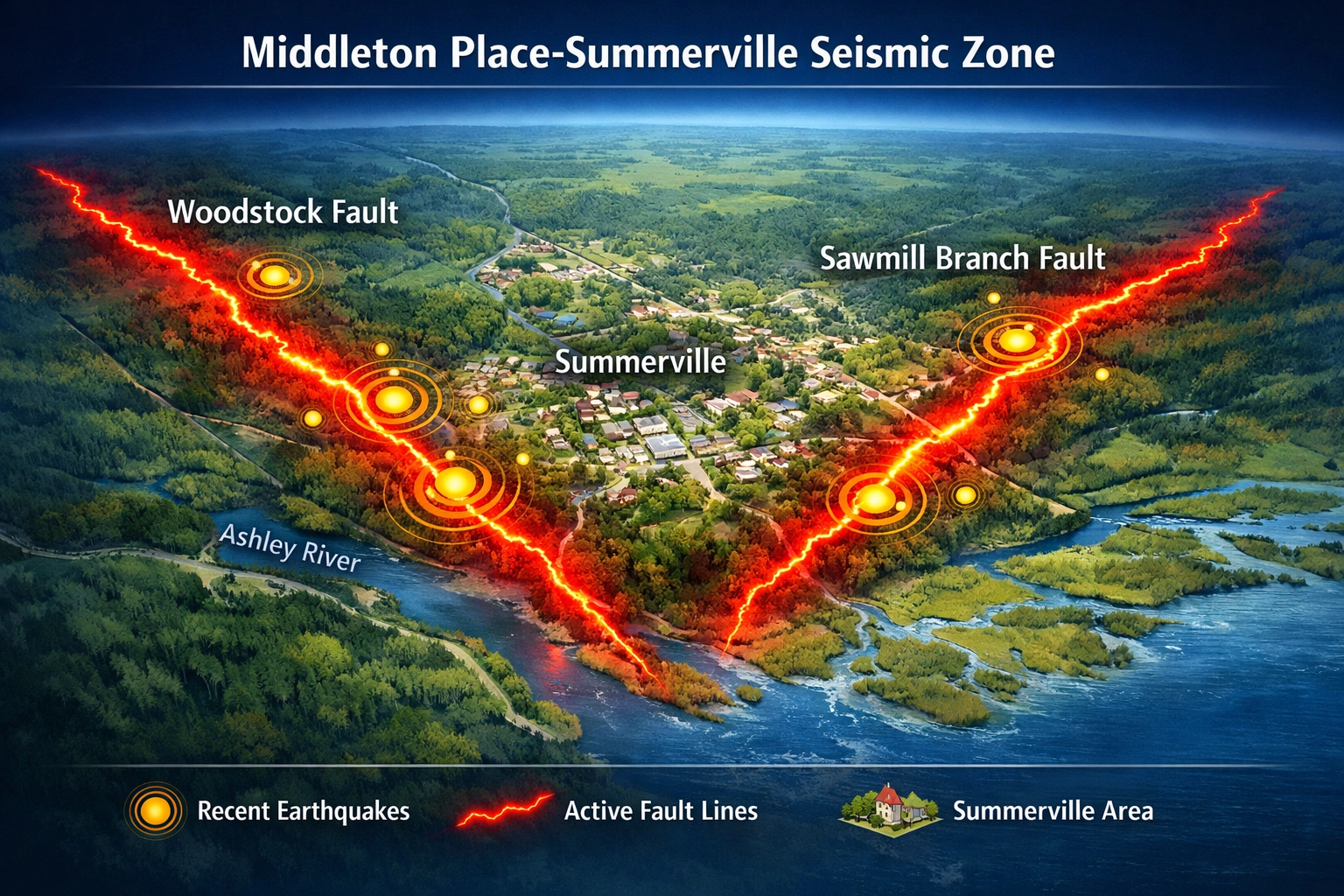
Here's something that might actually be reassuring: geologists say that having more smaller earthquakes is actually better than having one big one.
When we experience an earthquake swarm, like what's happening now, stress is being released in small bursts. Each little shake is letting off a bit of that accumulated pressure. As one geologist explained, "the more smaller ones we have, the better off we are."
That said, experts are quick to point out that these minor earthquakes aren't necessarily indicators that a larger event is coming. They could be, or they could just be the Earth doing what it does, releasing stress in manageable chunks.
There's no reliable way to predict earthquakes, which is why preparedness is so important.
What Should You Do?
Whether you've felt every single tremor or slept through them all, here's what local officials and the SCEMD recommend:
If You Feel an Earthquake
- Drop, Cover, and Hold On: Get under a sturdy desk or table, cover your head and neck, and hold on until the shaking stops.
- Stay away from windows, bookcases, and heavy furniture that could fall.
- If you're outside, move away from buildings, streetlights, and utility wires.
- If you're driving, pull over safely, stay in your vehicle, and avoid overpasses or bridges.
After an Earthquake
- Report what you felt to the USGS through their "Did You Feel It?" system at earthquake.usgs.gov. Your reports help scientists understand the scope and impact of earthquakes.
- Check for damage in your home, especially around gas lines, electrical systems, and structural supports.
- Be prepared for aftershocks, smaller earthquakes often follow larger ones.
Preparedness Steps
- Review your insurance coverage. Standard homeowner's policies typically don't cover earthquake damage, you need a separate earthquake policy.
- Create an emergency kit with water, non-perishable food, flashlights, batteries, a first aid kit, and important documents.
- Secure heavy items in your home. Bolt tall furniture to walls, secure water heaters, and use museum putty for breakable items on shelves.
- Make a family communication plan so everyone knows how to reach each other if cell networks go down.
The South Carolina Emergency Management Division (SCEMD) has detailed guides and resources at scemd.org.
The Bottom Line
Living in Summerville means accepting that we're in an earthquake zone, it's just part of our local geology. The recent activity is unusual but not unprecedented, and it's a good reminder to be prepared.
These tremors aren't cause for panic, but they are a nudge to review your emergency plans, consider earthquake insurance, and maybe secure that heavy bookshelf you've been meaning to deal with.
Stay informed through the USGS and SCEMD, report what you feel, and know that scientists are actively monitoring the situation. And hey, if you felt that 2.9 shake on Saturday night, you're definitely not alone: half of Summerville was talking about it on Sunday morning.
For more local news and community updates, visit What's Up Summerville or check out our events calendar to see what's happening around town (earthquakes aside).
Stay safe, Summerville!
Sources & References:
- U.S. Geological Survey (USGS) – earthquake.usgs.gov
- South Carolina Emergency Management Division (SCEMD) – scemd.org
- Historical earthquake data from USGS and SCEMD archives